
Axe Yamazaki MM-10 Review
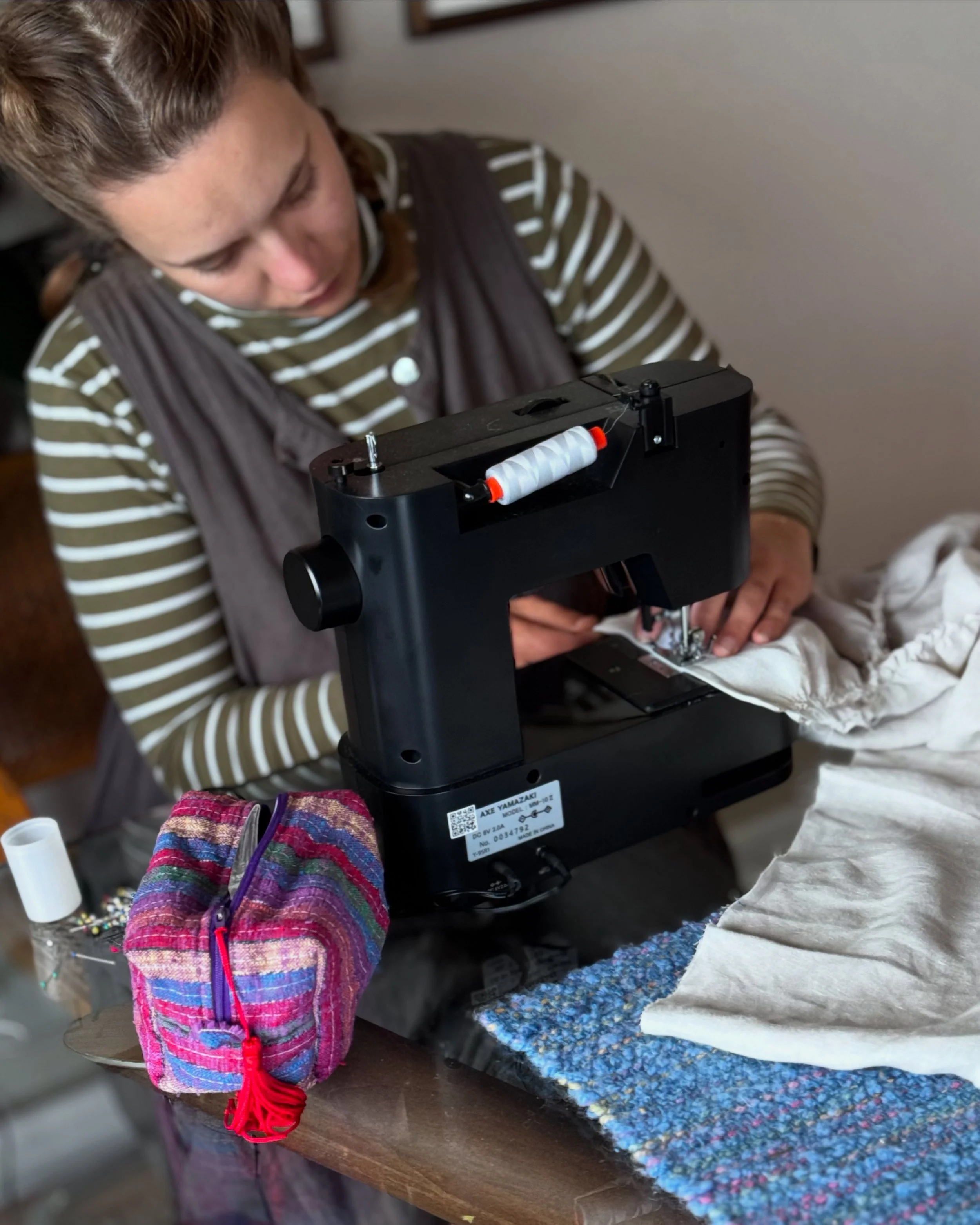
I first saw the Axe Yamazaki machine at the 2025 Quilt Con Heather Ross booth, and it was such a cutie - so small and beautifully designed. I kept thinking how I would love to have a second more portable machine to play around with so I was excited when Axe Yamazaki offered to send me a machine to try. I haven’t had a chance to try it all, but I’ve tried to test the machine with a variety of projects I like. Here are my thoughts and useability ratings:
Overall: 7/10
Sleek and modern look for a small and super portable basic machine. I would recommend for travel (especially long distance travel), small living/working spaces, basic projects and repairs/alterations with lightweight fabric. Easy setup and use with or without AC power or a foot pedal. Pros: portability and design, battery powered sewing, and sewing without the foot pedal. Cons: I don’t like the universal foot it comes with. Hand-threading the needle.
Projects:
Quilted boxy zip pouch. My first project on the machine. I made this to hold all my tools and snuggle perfectly into the throat space of the machine.
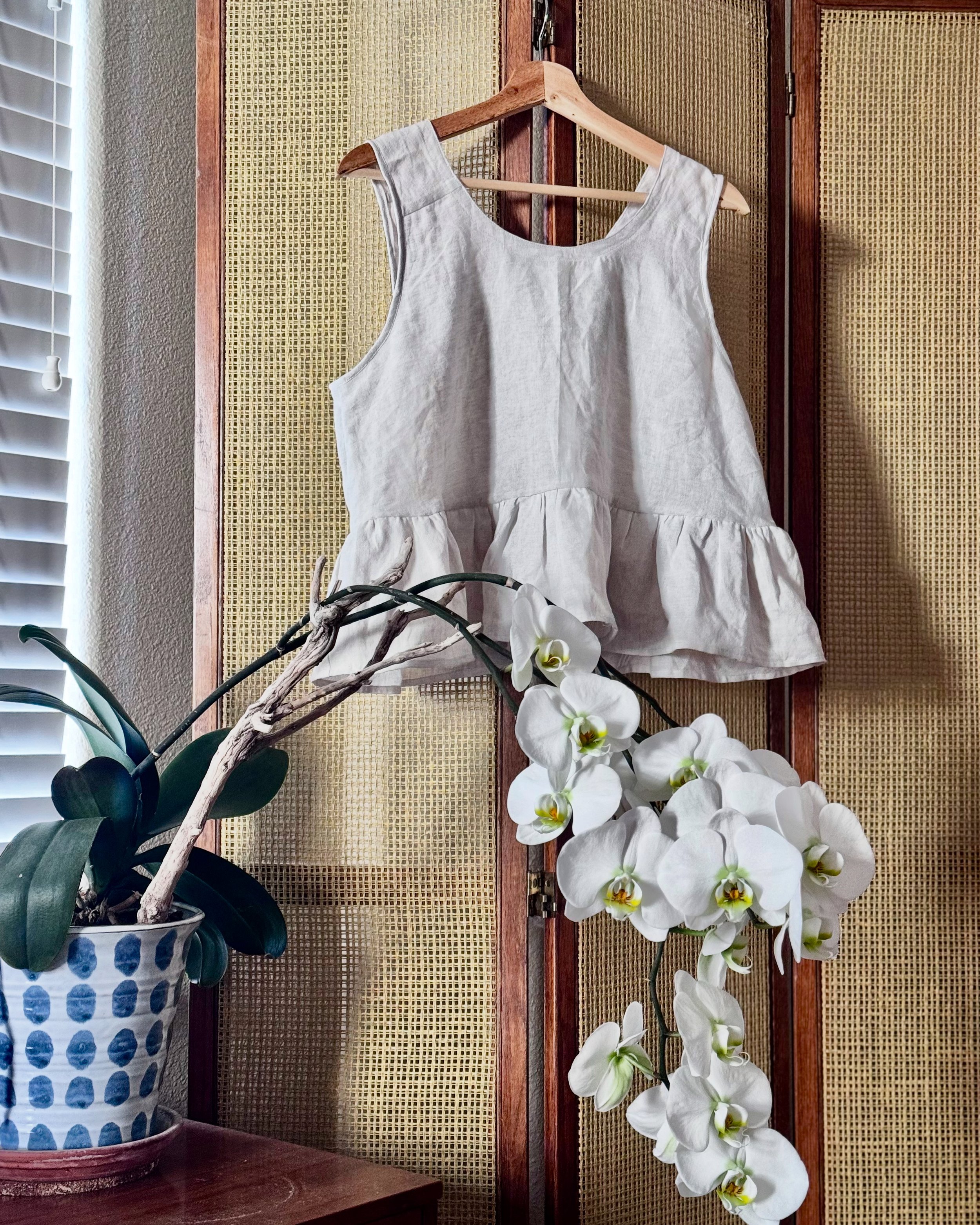
Garment (Peppermint Magazine Peplum Tank pattern). I’m a beginner garment maker and this project was perfectly fine for a simple linen top with gathers and french seams.
Foundation Paper Piecing (1.5” Flying geese). Would not recommend for an FPP project - I kept losing the thread from the needle and the smallest stitch length would not be good for tearing papers easily.
Piecing a quilt block (Queens Crown Quilt Block tutorial by Feral Notions). Can totally do this.
Repairing a ripped pocket seam on a jacket. Easy, totally doable.
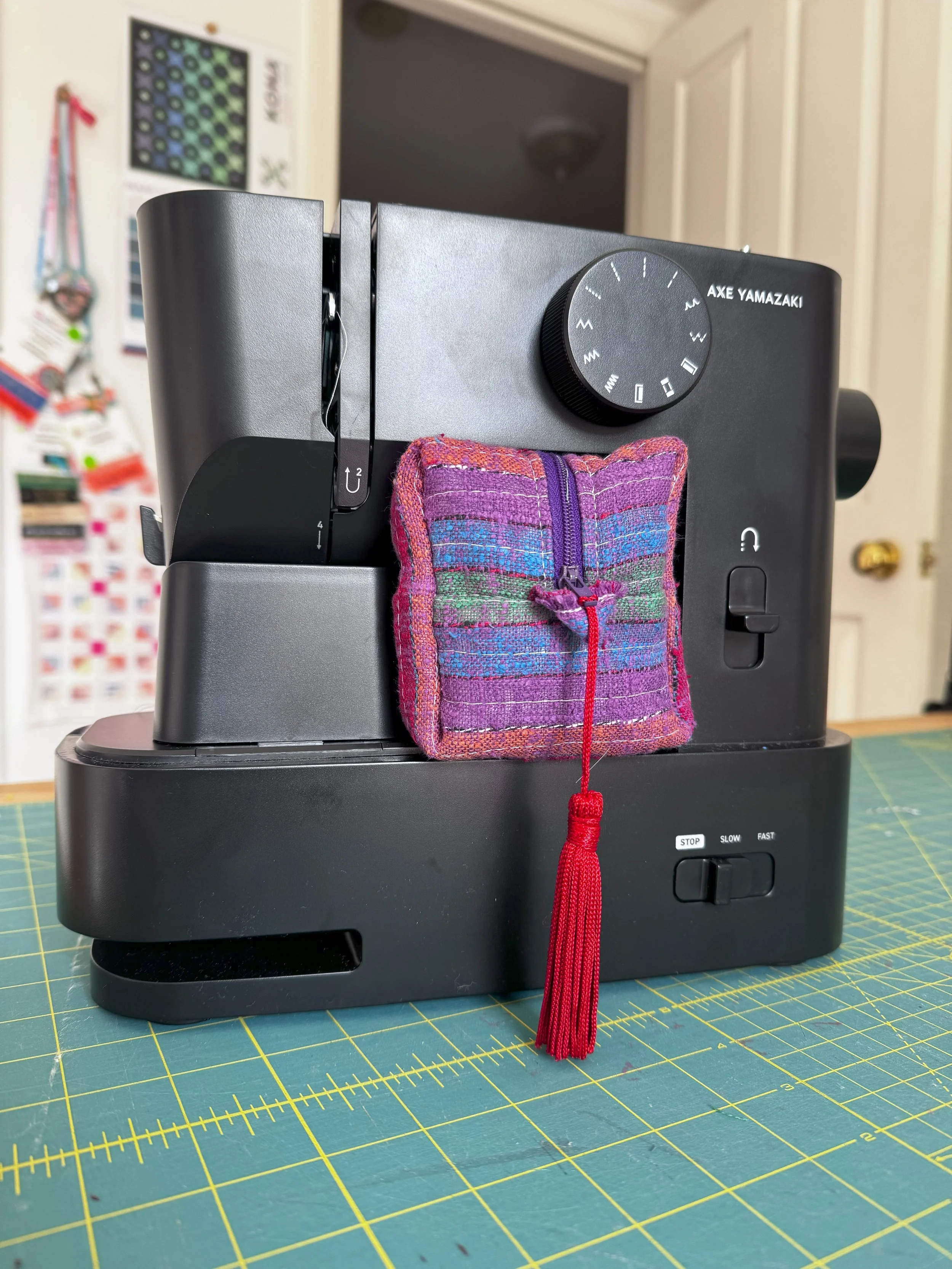
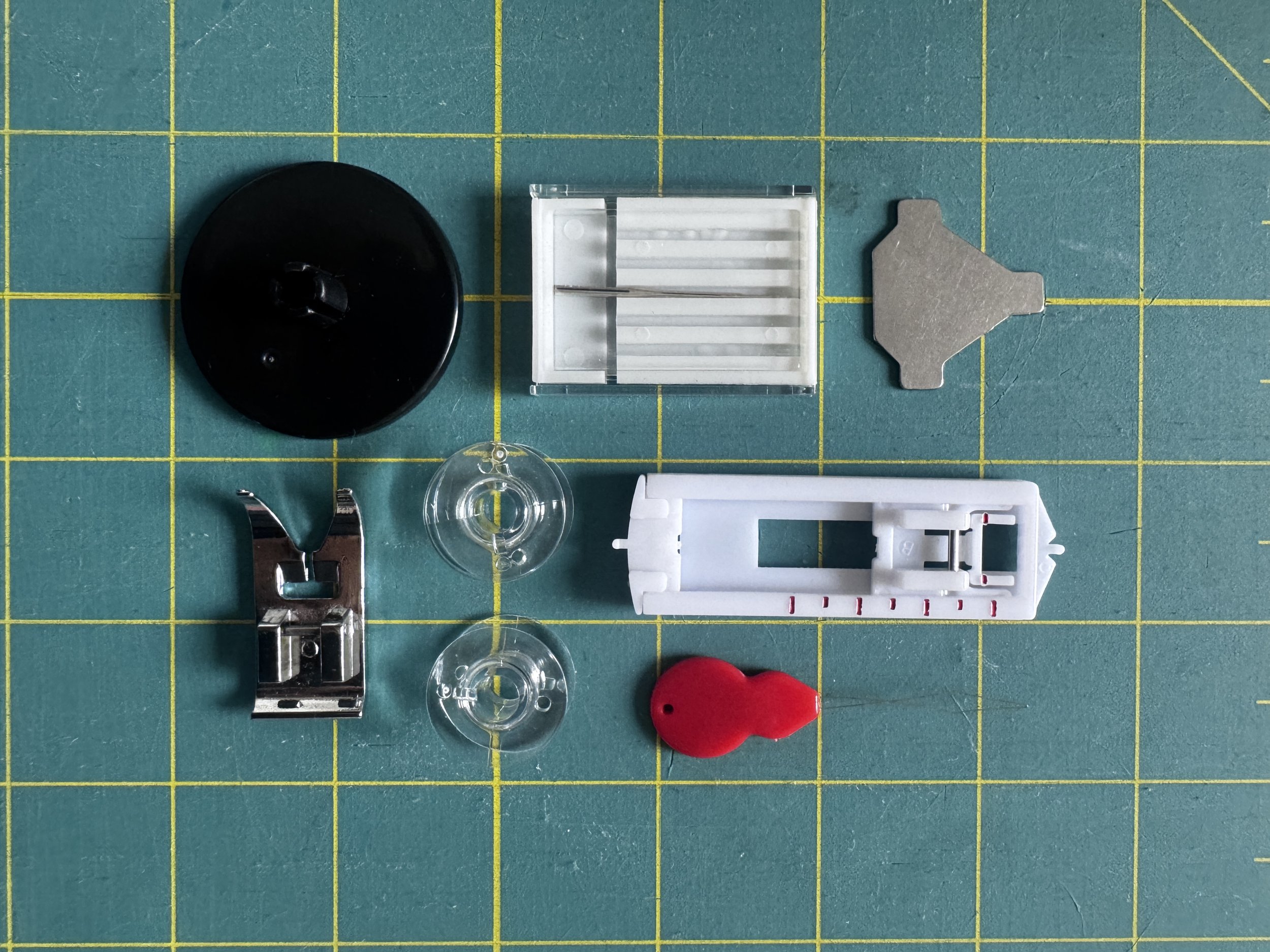
Accessories that come with the machine.
What’s in the Box!?
The machine
Power cord and foot pedal
Instruction manual. And QR code sticker for accessing resources online.
Smartphone stand and needle guard
Baggie of accessories including two extra bobbins, needle threader, one extra needle, buttonhole foot, and one of those triangle-shaped screwdrivers.
Portability: 9/10
Extremely light (<5 lb), compact shape fits perfectly into a tote bag or small nook in the home. Would be perfect for packing in a suitcase or carrying on a plane for long-distance trips.
You might want a small pouch to carry tools and parts along with the machine.
I wish it had a handle for ergonomics while carrying.
Machine Threading: 3/10
Instructions and diagrams for threading the machine are intuitive.
Get your eyes on for hand-threading the needle. My 30 year old ojos are still pretty good, but this was the most frustrating part. My everyday machine has a built-in needle threader and I had no clue how spoiled I was. The toolkit comes with a basic needle threader, but this still requires some finesse and good eyesight. I use a leader/ender fabric scrap to try to avoid constantly re-threading the machine.
Spool holder pin is 2.5” long so maybe made for smaller spools of thread. Longer spools might fit if the pin is tilted upward, but you won’t be able to use the spool cap to keep it secure.
Bobbin winding is fine, but a bit slow for me. You do have the option to let it wind on its own without using the foot pedal (see stitching without a foot pedal below).
Presser Foot: 5/10
The foot it comes with is fine for garment sewing, with large pieces of fabric, and wide seams, but is not ideal for ¼” seams and quilt piecing. Seams were getting folded or caught in the foot since the opening was so wide.
Additional feet: Buttonhole foot which I have not tried. No zipper foot or quarter-inch foot included.
Switching out feet to one from my Janome is possible, which is what I did when I needed to sew a zipper. I’m unsure if all feet would work on this machine.
Stitching: 7/10
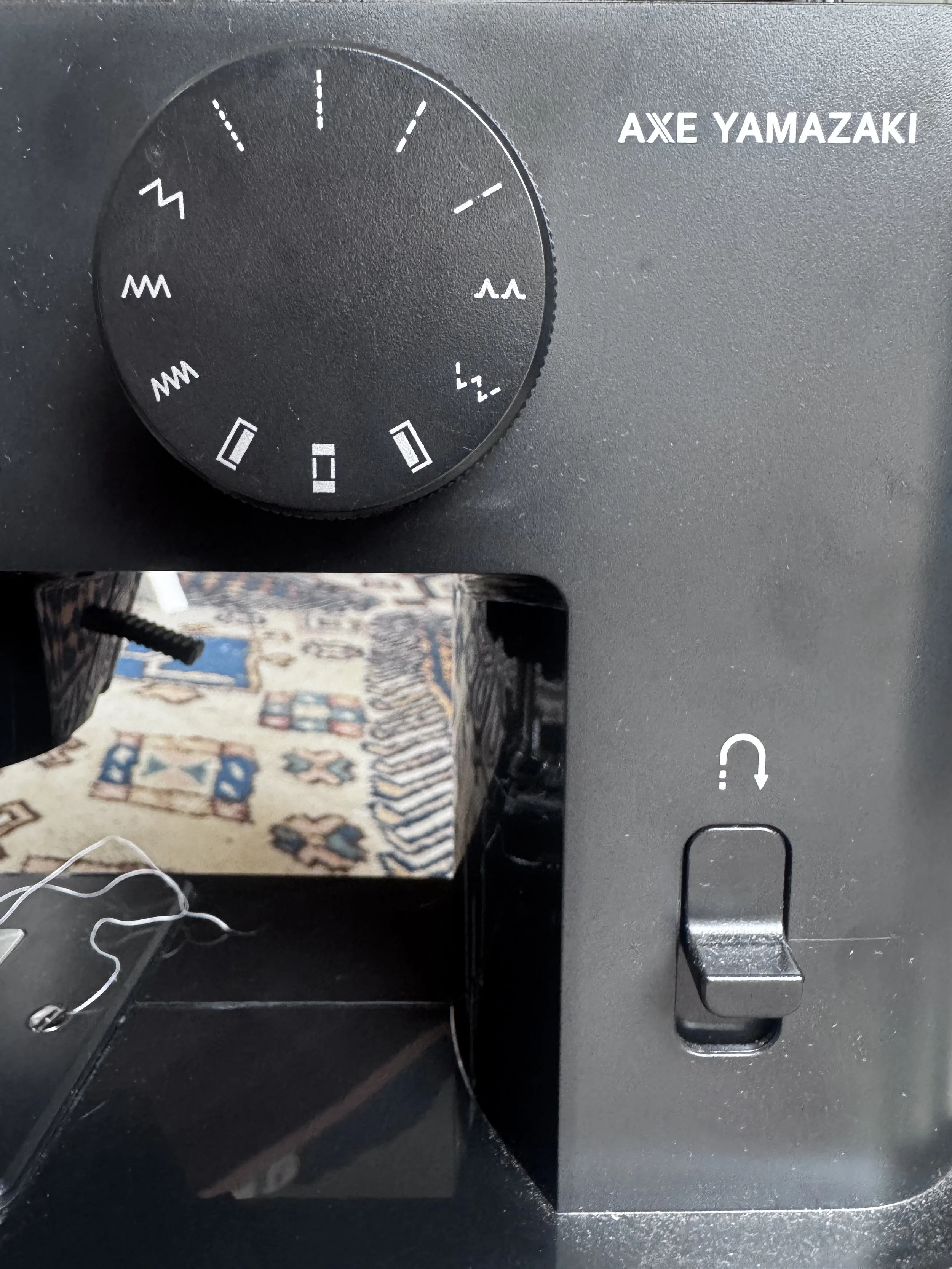
There are 12 stitch options, 4 straight stitches of different stitch lengths, 3 zig zags of different stitch lengths, a blind hem stitch, a three-step zig zag, and three settings for each step of creating a buttonhole. I don’t use much more than straight or zig zag on my everyday machine so I found these fine for normal use. Have not tried making a buttonhole.
No measurement marking lines on the baseplate area. I marked the ¼” seam guide with tape.
Tension out of the box is good for using 50wt cotton thread - I have not tried other thread weights or had to adjust tension.
Pressure foot and feed dogs pressure is not adjustable. It was fine for my test projects though.
Stitching without a foot pedal: I didn’t know this was a thing, but I love it. I can use one hand to guide the fabric, while the other hand toggles between on, slow, and fast settings. Sometimes it’s nice not to use the foot pedal.
Stitching with the foot pedal: Keeping with the portability theme, the foot pedal is very light. There’s no speed regulator on the machine so you’ll have to get a sense for using the foot pedal to adjust speed manually. I’ll note that flooring the foot pedal (fastest) is faster than the “fast” setting on the lever. Still not as fast as the fastest on my everyday machine.
Power: 7/10
AC Power: I didn’t expect this to be as powerful as my normal machine, but I was pleasantly surprised. Lighter fabrics like linen or quilting cotton are easy to sew through multiple layers - sewing french seams was a breeze. Quilting my pouch was totally fine with batting and two layers of fabric. Some difficulty and hand-cranking needed for sewing over the zipper of the pouch and thickest areas.
Battery power: I was most excited for this - cue romantic nature sewing montage. The machine takes four AA batteries (batteries not included), so I decided to buy/use rechargeable AA batteries. Though, I would’ve expected it to have a rechargeable battery pack instead. There was some minor difficulty with thicker seams compared to AC power (think 6+ layers of quilt cotton). I completed one block, sewing for about an hour with the rechargeable batteries and could definitely tell battery power was getting low.
At home Servicing: 5/10
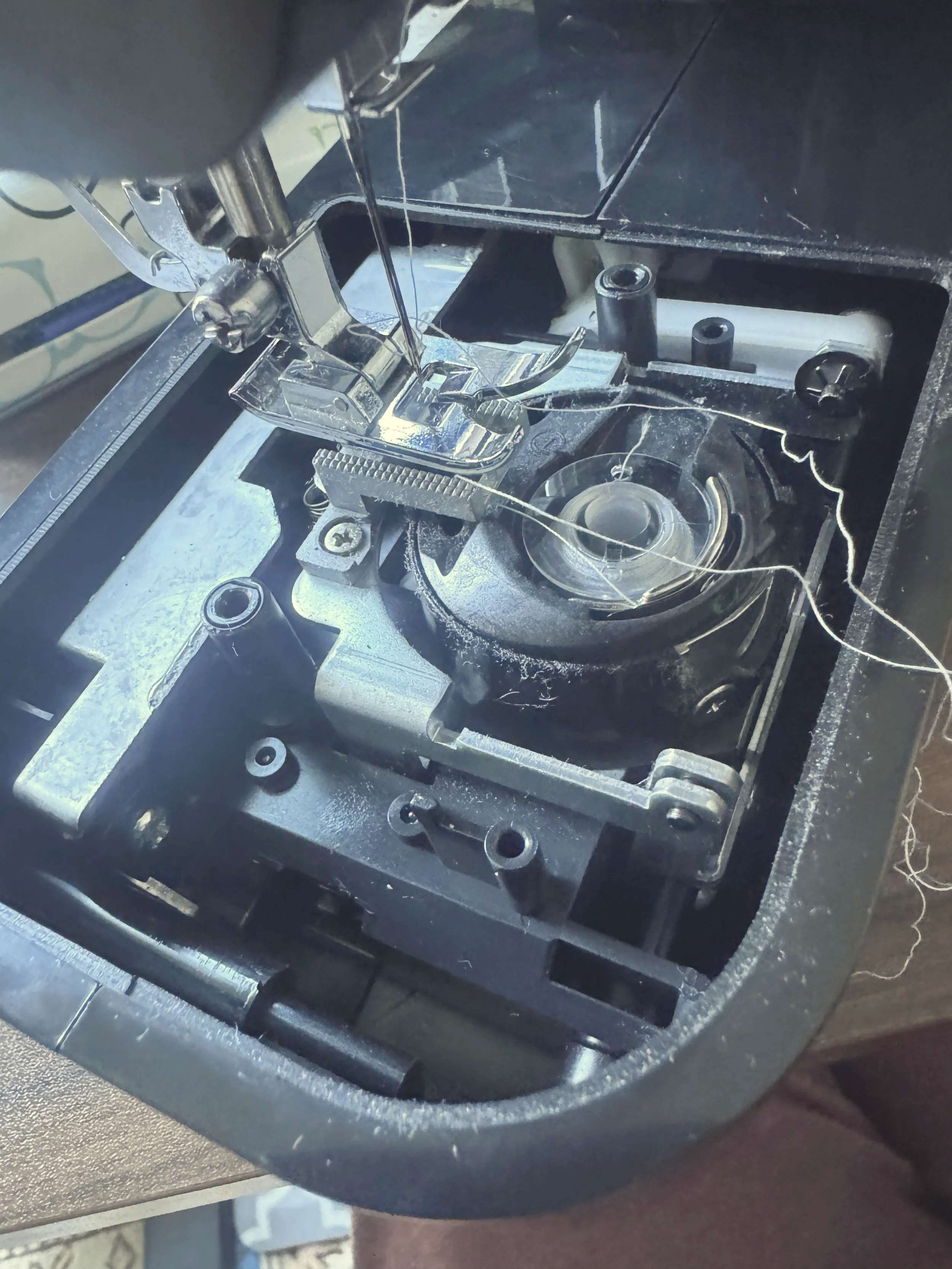
Inside the base of the Machine. Also see the presser foot it comes with.
Undercarriage is accessible for cleaning and oiling. Bobbin case is removable for adjusting tension if needed, though I have not needed to do so.
No easy access to the upper area of the machine for cleaning/oiling joints and things like the needle bar. You’d have to unscrew the whole thing to do this.
Kaitlin’s quick tips for increasing useability:
Mark seam measurements on the base plate with tape.
Pre-wind bobbins on a more powerful machine.
Test and buy additional presser feet that fit the machine.
Get an easy sewing machine needle threader.
Rechargeable batteries if you want to use battery power feature.